Showing posts with label Reading Notes. Show all posts

Tuesday, November 15, 2016

Week 13 Reading Notes: Russian Fairy Tales Part B

In The Witch Girl I was surprised that the witch was someone's daughter. I just assumed that she would be a witch that lives in the woods on her own or with other witches. It reminds me of the Salem Witch Trail time period in the American northeast. I could write a story with a similar plot, but set in Salem. Also, I wonder why no one had thought to stay awake and fight the witch when she came. Only the Cossack thought of this.
The priest's son is an unsuspecting hero in The Headless Princess. I could write about someone who sees a power figure doing something evil behind closed doors. Then he has to race to save everyone before the evil person can get to him. I like the elements of magic that his teacher showed him to use. It could be a metaphor for 'knowledge is power.' And at the end, even the princess's father wanted nothing to do with a witch. Witches must have been a big deal in Russia.
The Warlock makes me feel like everyone in Russia wants to evade death and keep all of their wealth. I could write about someone who sells their soul to live forever and be rich, but they get outsmarted by a child with a cross. Or it could be about three witches who try to steal an old man's wealth, but he outsmarts them and gets to live forever.
The Fox-Physician continued with the 'foxes are tricksters' theme. The old man should not be too sad though, so long as he can get back up the cabbage to heaven. It seems to me that there was no rhyme or reason to the story. I cannot figure out if there is a moral or lesson to be learned. Maybe the lesson is to not trust a fox with your loved one's remains.
I like the communication with people in the afterlife in The Fiddler in Hell. I could use that to help me write a story where someone visits a loved one in the afterlife and they receive some sort of divine assistance. That could help me write part two of Aaron Discovers the World.

File:Moujik and family.jpg
Moujik and Family, artist unknown. Found on Wikimedia, here.

Bibliography: Russian Fairy Tales by W.R.S. Ralston, found here.

Wednesday, November 9, 2016

Week 12 Reading Notes: English Fairy Tales Part B

The characters in Henny-Penny are too naive to beware the fox. They pay for it with their lives, except for Henny-Penny, but she never gets to tell the King that the sky is falling. The fox is the classic trickster, convincing everyone that a shortcut to the King's castle runs through his dark cave.
Molly Whuppie is a story of harrowing circumstances that call for a young hero to rise to the occasion. Molly is the youngest of the three unfortunate sisters, but she is the one who is most clever and does all the work. She also has no problem sacrificing other people for her benefit. She is an interesting character to say the least.
Mr. Fox is a classic horror story with a happy ending. The tension builds very well when Lady Mary is in Mr. Fox's castle. The writing on the wall is very creepy, and I could use that idea in my story. Maybe Aaron could stumble upon a mass grave of all of the dissenters the Mind of Six ever took away and killed. At the end, I imagine the masses breaking down the door to the palace of the Mind of the Six to tear them apart, just like the guests did to Mr. Fox at Lady Mary's wedding.
Johnny-Cake, or another version of the Gingerbread Man, describes overconfidence biting you in the butt. It teaches readers not to boast or gloat, because someone, usually a fox, is always cleverer than you.
Mr. Miacca strikes me as the kind of story with which parents scare their children into obedience. However, Tommy gets away without any issues, which makes the story less effective. Tommy needs to get boiled and eaten to really scare kids into obeying. I almost empathize with Mr. Miacca; the man just wants to eat and feed his family.
The Laidly Worm of Spindleston Heugh is a really great story with magic and tragedy and a happy ending. I like that the rowan wood is resistant to the witch's magic spell. I could write about Aaron finding a special tool or element that can bring down the Mind of the Six.


Laidly Worm of Spindleston Heugh,illustrated by John D. Batton, found on Wikimedia, here.


Bibliography: Part B of the English Fairy Tales Unit by Joseph Jacobs, found here.

Tuesday, November 8, 2016

Week 12 Reading Notes: English Tales Part A

Tom Tit Tot is nearly the same story as Rumplestiltskin, with a few differences. I like that the King was the one who overheard Tom Tit Tot sing his name, and he accidentally revealed it to his wife. It is interesting that she had two different plot lines to follow, one with the King, and another with Tom Tit Tot. It ended happily enough.
The Rose Tree is a good story of jealousy and revenge. It shows how the family is torn apart, and jealousy makes people do crazy things. Luckily, some sort of magic turns the dead girl into a tree and dove, and that dove has immense strength. How strong she must have been to carry a millstone and drop it on her murderer.
The Old Woman and Her Pig gave me some anxiety. I thought that old woman was never going to get home. I guess all of the extra characters just needed a little motivation. Thanks to the cat and the cow for working with the old woman to help set off the chain.
Binnorie is a wild tale of two sisters trapped in a love triangle. Jealousy gets the better of them, and one kills the other. Love is a powerful emotion, and it can lead people to do crazy things to the important people in their lives. In the end, they are reminded of her existence, but everything else goes on as normal.
Mouse and Mouser was a little confusing. I guess the cat just played along to be the mouse's friend, but really he just wanted to eat the mouse all along. Look out for people that are sneaky liars. I could use this as a character inspiration for part two of Aaron Discovers the World. Someone could lead Aaron to the Mind of the Six, only to have guards waiting for him.
Cap O' Rushes was a long-winded story about loving your family and misunderstanding. At least it had a happy ending.

File:Page 4 illustration in English Fairy Tales.png
Photo of Tom Tit Tot, illustrated by John D. Batton, found on Wikimedia, here.


Bibliography: English Tales Part A by Joseph Jacobs, found here.

Wednesday, November 2, 2016

Week 11 Reading Notes: Alice in Wonderland Part B

The conversations with fantastical characters are made up of nonsense, jumping hastily from one topic to another, seemingly without rhyme or reason. Perhaps I could use that writing style to introduce important information through a seemingly mad character. Maybe the character will speak what seems like nonsense, but is actually important. The dormouse being asleep inspires me to write in that a security guard has fallen asleep, and that gives Aaron a moment to slip past and into uncharted territory. The Queen of Hearts inspires me to model a character from the Mind of the Six after her. Someone should be so ruthless as to rule with fear in a dystopian society. I might model a character after the Cheshire Cat, so that Aaron may have a companion that appears and disappears at random, possibly with some important information about what to do next. The trial scene makes me consider writing in a trial before the Mind of the Six. That setting could be where an important piece of plot takes place. The ending of Alice in Wonderland, the part where Alice wakes from her dream, makes me consider writing that Aaron escapes and frees all of the people of Carcera, only to wake up from a dream and find he is still being held captive there. He might search for the same door whence he escaped, only to find nothing there. Despite the very different themes and writing styles, I have produced some very useful ideas from the Alice in Wonderland story that might help me in writing my story. If anything, Alice in Wonderland inspires creativity and imagination.


File:Alice par John Tenniel 30.png
Alice playing croquet with a flamingo and hedgehog, illustrated by John Tenniel, found on Wikimedia Commons, here. I chose this illustration because I found it hilarious that she would have to use a flamingo and hedgehog to play croquet. What a mad world!


Bibliography: Story of Alice in Wonderland, part B, by Lewis Carroll, found here.

Tuesday, November 1, 2016

Week 11 Reading Notes: Alice in Wonderland Part A

Lewis Carroll is an incredibly creative writer. He puts Alice into the wildest situations with the wildest characters, and he creates equally wild ways for her to move from place to place. Alice as a character is fun to read about. She seems so innocent and curious. She speaks very properly for such a young girl, and she speaks properly to everyone and everything she comes across. I think she represents innocence and youth, and the story continues in a way just as crazy as her imagination. I find it hard to imagine how different items keep appearing to help her change sizes, and I find it odd that they all have different effects. I like the stream of consciousness writing style Carroll uses, and it is especially enjoyable as Alice is falling down the rabbit hole. The characters make this such a bizarre world to explore. The rabbit is running late, the caterpillar is smoking, the footmen are each with a fish head or frog head, the baby is a pig, and the cheshire cat is grinning iconically as it disappears. I admire Carroll's imagination in creating such characters. It certainly does make the story feel very much like a dream. I like the way that the cheshire cat responds to Alice's question about which path she should take. Alice has no idea where she wants to go or why, and the cat is really quite unhelpful. That could be a metaphor for life. Either way she goes, Alice is bound to meet exciting characters on her adventure. 

Alice 05a-1116x1492.jpg
Illustration The Caterpillar by Sir John Tenniel from the Wikimedia Commons, found here.
I thought Alice's singing a poem with the caterpillar to be an interesting part of the story.

Bibliography: Readings from the Alice In Wonderland Unit Part A, found here.

Wednesday, October 26, 2016

Week 10 Reading Notes: American Indian Fairy Tales Part B

Immediately I notice that these fairy tales give names and personalities to inanimate objects, and I am inspired to write a story in the same fashion. I will give everyday items like staplers and refrigerators names and personalities. Perhaps some items will be essential in helping the protagonist conquer the antagonist, who could also be an object. Like in the story How the Summer Came, I would like to put my character in a cold, lifeless environment to begin the story. He longs for something better, and he remembers how good things used to be. I like dystopian settings in stories, so maybe our antagonist is kept in a cold, emotionless oligarchical society. He is finally able to either escape or overturn the existing regime and free all of the oppressed people. I like the idea of the protagonist having to crash through a barrier or two-way mirror, like O-jeeg had to break through the sky in How the Summer Came. I also like the idea of the protagonist dying as a self-sacrifice for the good of a loved one, just like O-jeeg in How the Summer Came. Perhaps the protagonist will be a daydreamer, much like Neen-i-zu in The Fairy Bride story. That would help explain how he communicates with inanimate objects. Or he could be a magician of sorts, like O-jeeg. I really like how strong-willed Neen-i-zu is despite her mother's desire for her to be normal and marry a hunter. She followed her dreams and eventually did what made her happy. All of these stories inspire my writing for the week. I am considering a strong-willed protagonist in a cold, dystopian environment who daydreams and talks to objects or animals. He knows about the beautiful world outside of the monotone walls that are said to protect the citizens. He finds a way to save everyone and take them back to the beautiful outside world, but he loses his life in the process. Perhaps where he dies a magical tree of life will sprout.


Photo of the wall at the US-Mexico border, taken by Wonderlane and found on Flickr, here.
I chose this photo to represent the wall keeping our protagonist separated from nature in the story I am going to write. It represents oppression and unnatural disharmony.

Bibliography: Stories from American Indian Fairy Tales Unit B, found here.

Tuesday, October 25, 2016

Week 10 Reading Notes: American Indian Fairy Tales Part A

It is quite obvious that the north wind was disliked by Native Americans because of its tendency to hinder nature's ability to provide for people. The cold winter wind causes plants to die and animals to flee. This forced Native Americans to migrate south in order to survive. The wise storyteller Iagoo encourages children not to fear the wind because it is no match for a strong fire. In the story of Shin-ge-bis Fools the North Wind, Shin-ge-bis is not afraid of the North Wind because he is prepared and confident. I think it is a good story that teaches children not to fear nature, but to respect that there is a balance in nature.
I really enjoy the colorful description of nature and the animals. The environment is described vividly to set the tone. I think it is neat to tell a story in which all of the animals and humans are kind to each other and live in harmony. In the story of the Little Boy and Girl in the Clouds, the coyote is eager to help the humans. He also gives wise advice in looking for a solution, instead of asking how a problem came to be. The coyote is unable to retrieve the lost children, and none of the other animals are successful in that endeavor either. This story then becomes one of not judging a book by its cover and even the smallest animals can be helpful. The wee little worm is the unsuspecting hero of the story, and he returns the children home safely. Perhaps I will write a story about an unexpected hero that does not get the credit he deserves at first.
The story of the Child of the Evening Star just warms my soul in many ways. I love that the youngest, fairest daughter chooses to marry Osseo despite his appearance, but because he is pure of heart. Then he turns out to be the son of the Evening Star! Though his good fortune becomes his wife's dismay, all ends well when her beauty is restored, and they go to live among the stars. The continuing theme seems to be that good things will happen to people who are pure and good. I'd like to write about that.

File:The Historian (The How and Why Library).jpg
The Historian by E. Irving Couse. I chose this photo to represent the importance of storytellers in Native American culture. Found on Wikimedia, here.

Bibliography: American Indian Fairy Tales by W.T. Larned, unit A, found here.

Thursday, October 20, 2016

Week 9 Reading Notes: Cherokee Myths Part A

I chose to read the Cherokee Myths Unit because I am one very, very tiny part Cherokee.
The story of the creation of the world is unique and interesting. I especially like the idea that the underworld is the same as their world, but in opposite seasons, and they know this because the water is warmer than the winter air and colder than the summer air. To me, that communicates a truly creative sense of balance in an environmentally conscious culture.
I like that the story of discovering fire uses only animal characters to retrieve the fire. It signifies their strong belief in and respect of nature. I love that the water spider was the ultimate hero, successfully retrieving the fire. I did not see that coming!
The myths about the sun and moon are elaborate and thoughtful. The stories range from the playing of games to frogs attempting to devour the sun and moon. Also, pointing at a rainbow will cause joint inflammation; who knew?!
In the Deluge, like any good flood story, everyone dies, save one man and his family, but not before drowning the family dog.
The Cherokee obviously believed that tobacco had healing powers, and smoking was a large part of their culture. The story of how the hummingbird was able to retrieve the tobacco plant and seeds, and ultimately save an old woman's life, reinforces the idea that every piece of nature is important, no matter how small or seemingly insignificant. This makes me want to write a story about an underdog!
The rabbit is depicted as a clever trickster, and is ample inspiration for an antagonist. He can trick anyone, and he is a survivalist. This will make him a formidable opponent for my underdog. The hare seems to steal things from people by tricking them. This gives me the idea of making the antagonist a thief of some kind.
Wow! How the terrapin fools the rabbit with his own cunning wit in a version of the tortoise and the hare! Now I've got the inspiration for my underdog protagonist.

File:The Tortoise and the Hare - Project Gutenberg etext 19994.jpg
Photo of The Tortoise and the Hare by Milo Winter from Aesop for Children, found on Wikimedia, here.

Bibliography: Part A of the Cherokee Myths Unit, Myths of the Cherokee by James Mooney, found here.

Tuesday, October 4, 2016

Week 7 Reading Notes: Japanese Mythology Part A

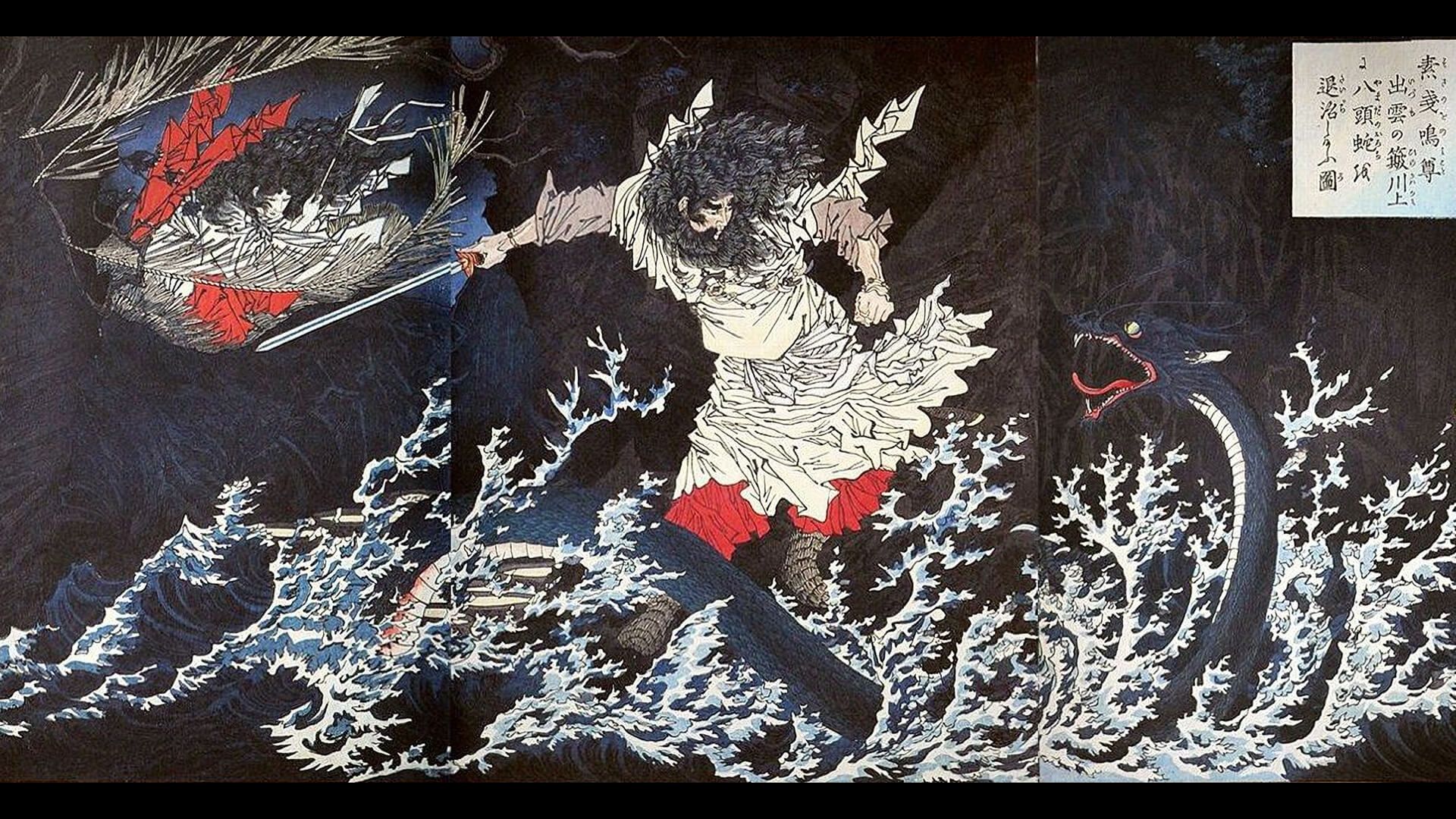
The story of Izanagi and Izanami almost immediately establishes a strong culture of patriarchy and male-dominated society apparent in Japanese history and lifestyle. The juxtaposition of good and evil in the form of deities is also existent in Japanese mythology, as demonstrated by sibling gods Amaterasu and Susa-no-wo. I really find it interesting that they gods bestowed "godlike powers" upon the earth people of Yamato. It's very neat that they consider wisdom, valour and craft, justice, mercy and love "godlike powers." That's a perspective I have not seen a lot of before. The gods becoming jealous of the way Izanami treats earth children is somewhat common in other mythology as well. Balance is very apparent in Japanese culture and mythology; Amaterasu and Susa-no-wo, Fire and Water. In the story of the Eight-Forked Serpent of Koshi, I think it was clever to brew sake at 8 times the normal strength, because obviously a serpent with 8 heads needs 8 times the sake to get drunk. I wonder why Ashinadzuchi and Tenadzuchi hadn't thought of that before!
I really like stories about epic monsters and heroes that set out to slay the monsters. I'm considering writing a story in which a monster of epic proportions is terrorizing a community, and so a hero comes forth to rescue everyone. In his quest, he finds that the monster is really a misunderstood character, and it does not want to hurt people anymore, or has a good reason for doing so. The moral of the story will be something along the lines of 'don't judge a book by its cover' or 'everyone comes from a different background' or 'you don't know why someone is having a bad day'. It will be a story of understanding and tolerance and compromise.

File:Yoshitoshi Nihon-ryakushi Susanoo-no-mikoto.jpg
Susa-no-wo slaying the eight-headed dragon, painting by Tsukioka Yoshitoshi, found on Wikimedia, here.

Bibliography: Romance of Old Japan, Part 1: Mythology and Legend by E.W. Champney and F. Champney, found in the Japanese Mythology Unit 1, here.

Wednesday, September 28, 2016

Week 6 Reading Notes: Tibetan Folk Tales Part A

I chose to read the Tibetan Folk Tales because I am unfamiliar with Tibetan culture, but I have heard of Tibetan Buddhism and Tibetan monks, and that sounded interesting.
I love the little guy that outsmarts the big predators in the Tiger and the Frog story. I tend to cheer for underdogs, and this story shows how intimidating a smart frog can be to a hungry tiger.
The story of the Cony Who Got into Bad Company is a smart story about a rabbit that hangs out with a crowd that has a reputation for stealing, and he joins in the fun, taking advantage of an old lama. Then the crony was basically banished from his crony civilization because of the poor company he chose to keep.
The story of the Donkey and the Rock is relatable to common attitudes of today. No one wants to take responsibility for actions or come to an understanding. Everyone wants to sue other people and take them to court. In this scenario, the judge comes up with a clever way of dealing with a silly case. I love the twist that everyone who comes to see the trial has to pay to leave.
The story of How the Fox Fell a Victim to His Own Deceit is a good story of jealousy and conspiracy. The fox really just wants attention, in my opinion, but he goes about it in a totally wrong way. He wasn't going to be any happier if the calf and the tiger killed one another. They would make a really strong team together, so his desires were terribly shortsighted. He got what he deserved for trying to tear apart two wonderful friends.
The story of the Ingratitude of Man is a revival of 'don't judge a book by its cover.' The people whom you think are of no use to you often turn out being the people that can help the most. It is important to be nice to everyone, especially when they are helping you out.


Tibetan Tiger image chosen for its relation to Tibet and the prominence of tigers in Tibetan Folklore. Image found on Wikimedia, here.

Bibliography: Tibetan Folk Tales by A.L. Shelton, with illustrations by Mildred Bryant, found here.

Tuesday, September 20, 2016

Week 5 Reading Notes: Part A - Persian Tales

I decided to read the Persian Tales this week because I have a friend who was born in Iran, and I would like to see if maybe he has heard these fairy tales growing up. I can't say that I know much about Persian tales or folklore, so I was excited to read and identify similarities between these stories and the ones I read growing up.
I love the immediate jump to "let's go and fight" in the Wolf and the Goat story. The author really wasted no time in letting the reader know what the big conflict was going to be. I like the happiness of the story; the baby goats don't get eaten, the goat outwits the wolf, and the baby goats are all reunited.
Wow, the story of the City of Nothing-in-the-World was fascinating! I love how imaginative the author was. The girl's story gets more and more farfetched as it continues. I feel like the author was playful in how the girl's adventure is wild and included her climbing into a melon and a tree growing on a chicken's back. I want to write something just as outlandish.
Everyone is so kind and sympathetic in the story of Susku and Mushu. It's a real tragedy that Susku dies after such a happy beginning to a story. I love how all the characters introduced show solidarity for Mushu's loss. It seems like the whole world was affected by Susku's death.
The story of the Boy who Became a Bulbul escalated quickly! I can't imagine a scenario where I would make a bet with my dad, and the loser of the bet gets his head chopped off. However, beheading was a common punishment for many things in that part of the world, so maybe this was only a slight exaggeration. Either way, I am happy the boy got his revenge, and his sister got candy.
The Wolf-Aunt story is a great way to convince men to listen to their wives. I think it is a good lesson to learn that some things are too good to be true.
The stories all start and end with the same line, I find that quite interesting as well.
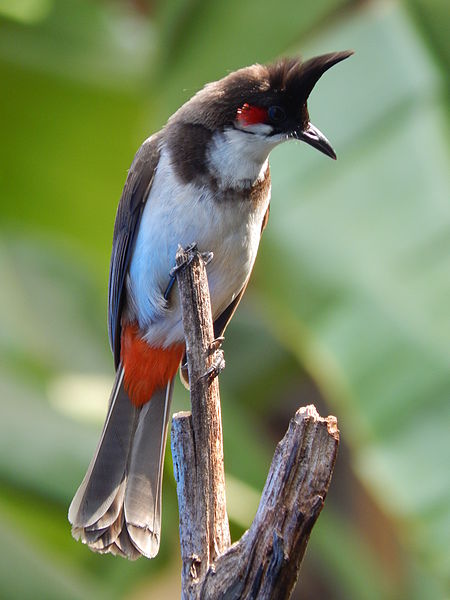
File:Goan Bird Red-whiskered Bulbul 1.JPG
Photo of Red-whiskered Bulbul bird by Nilesh Waradkar, found here.

Bibliography: Persian Tales translated by D.L.R. Lorimer and E.O. Lorimer, and illustrated by Hilda Roberts, found here.

Wednesday, September 14, 2016

Week 4 Reading Notes: Ancient Egyptian Myths and Stories

I have never studied ancient Egyptian mythology, and I found the creation story very fascinating. I love that it resembles Greek mythology in that Ra came from Nu, the first existing god, and Ra actually became more powerful than Nu, like Zeus and his Titan father Cronos. I like that Ra then creates whichever gods he sees fit, and anything he thinks of appears before him.
The story of Isis and Ra's secret name piques my interest by showing similarities to biblical and greco-roman mythology. The serpent created by Isis reminds me of the serpent that tempts Eve in the biblical creation story. The serpent is also a symbol of evil. Like the Greek and Roman gods, the Egyptian gods also show human characteristics of evil, deception and lust for power. They are not represented as perfect, sinless deities.
I found the story of Ra's journey through Duat, the underworld, long and tedious. It seems like everyone is a serpent at one time or another, both good and bad. I find it curious that Ra just creates gods and beings as he sees fit. However, it is an interesting concept that at night time the sun god Ra is making his way through the underworld.
In the story of Osiris, I get the idea that Ra was not a very good ruler of men on earth. Osiris comes along and teaches men how to farm and how to pray, and all is happy and peaceful. Then, of course, Set had to come along and ruin everything. Some people just don't like peace.
While I think Set is a morally bad guy, I understand the necessity of conflict in storytelling. The story is boring if it is always peaceful and happy. Something bad must happen to stir the pot. And, for some reason, I have a feeling that I will read more about Osiris later.
Unlike greco-roman mythology, gods and men alike seem to come back to life quite frequently and easily. It seems like Isis was going to take a baby and try to summon Osiris' spirit into him. I would have liked to read that, and perhaps I will write about that. I prefer that idea to the actualities of Osiris being mummified and brought back to life to become god of the dead.
Talk about action! The story of the wax crocodile was my favorite. There is drama and conflict when the scribe's wife falls in love with the young man. There is magic and revenge when the scribe creates a real, monster crocodile out of wax, who in turn eats the young man. Then, as if that wasn't enough, they burn the scribe's wife at the stake! Whoa.
File:Jewel Osiris family E6204 mp3h9199.jpg
Photo of sculpture of Set, Osiris and Iris. Found on Wikimedia, here. I chose this image because I find the story of these three to be the most interesting.

Bibliography: Egyptian Myth and Legend by Donald Mackenzie, from the Ancient Egypt Unit, found here.

Monday, August 29, 2016

Reading Notes: Aesop's Fables (Jacobs), Part A

Bibliography: The Fables of Aesop by Joseph Jacobs, Unit 1 found here.

Notes:
I really enjoy reading fables, especially because of the animal characters. Every different animal has its own distinct characteristics, talents and hindrances. For example, lions are universally feared, foxes are regarded as clever tricksters, and mice are generally friendly. I would like to write my story with human characters, but perhaps using similar characteristics to create distinct personalities. I really like the morals at the end of each story as well. I was surprised to notice similarities between some of the morals in the stories and modern stories. The Lion's Share reminded me immediately of George Orwell's political anti-communist novel, Animal Farm. The story The Hare with Many Friends told the saddest story, in my opinion. A seemingly happy social butterfly realizes that his friends are only superficial, and this realization is overwhelmingly lonely. I think I'd like to include a character like the Hare in that story, but with a happier outlook, and certainly less lonely. I'd also like to include an antagonist that gets braver as the story goes on, much like the fox in The Fox and the Lion. I can't help but laugh at the dog who drops his food into the pond in The Dog and the Shadow. I would like to write a character like that for comic relief. I think these stories are sparking my interest, and I'm excited to put some ideas on paper.

Illustration of The Dog and the Shadow by Walter Crane. Found here.